

By Phil Pavarini, licensed surety bond agent | October 19, 2026
Election Day is Tuesday, November 3. If you are on the ballot for county treasurer, clerk, sheriff, tax collector, constable, or a seat on a local board, there is a decent chance your state requires you to post a public official bond before you can take office. Most new officeholders find this out from a clerk in December, and that is later than you want.
Here is the problem in plain terms. In many places the oath happens in the first week of January. Count backward from there and you have roughly eight weeks, holidays included, to find out what bond you need, get approved, and get it filed with the right office. Miss it and some state laws treat the office as vacant. That is a rare outcome, but it is a terrible way to start a term.
So here is the clock.
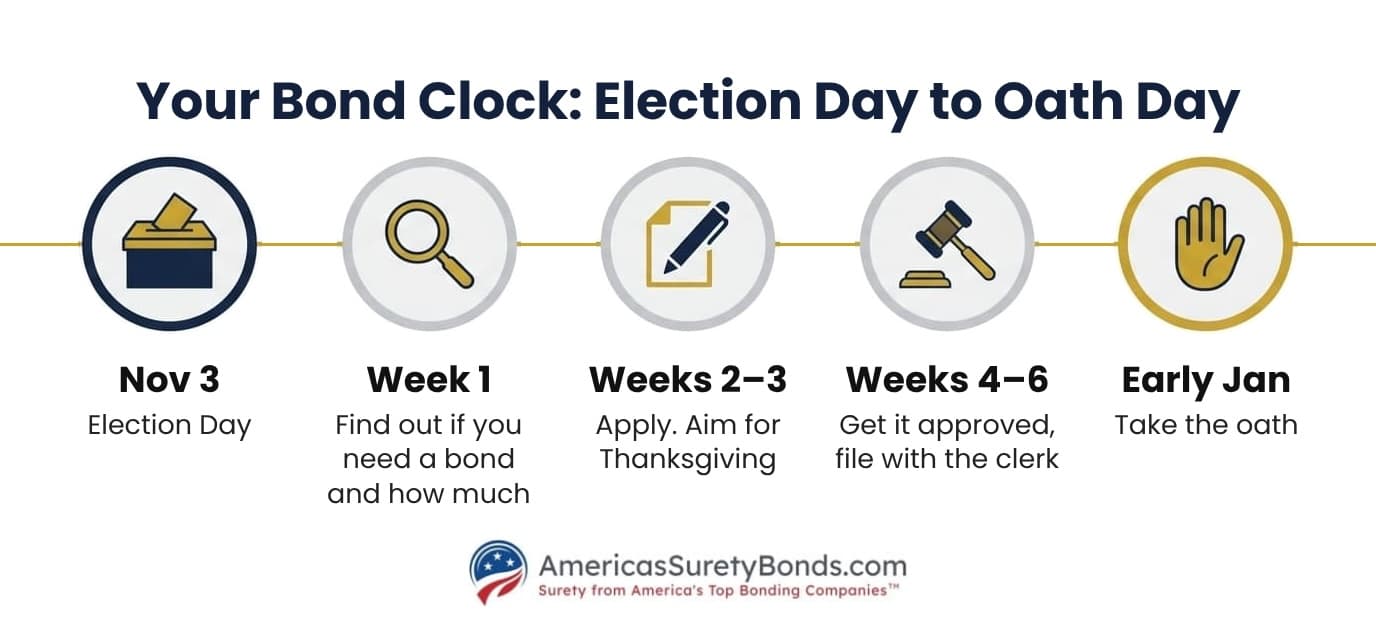
Week 1 (November 3 to 10): Find out what you need
Do not wait for the canvass to finish. Call the county clerk, the city attorney, or whoever administers oaths for your office and ask three questions. Does this office require a bond? What is the amount and who sets it? Does the county or city already carry a blanket bond that covers this position?
That last question matters more than people expect. Some local governments cover every elected officer under one blanket bond, and if yours does, you may not need to buy anything. Our guide on [blanket versus individual bonds](https://americassuretybonds.com/requirements/public-official-bond/blanket-vs-individual/) explains how to tell the difference.
Weeks 2 and 3 (November 10 to 24): Apply
Once you know the amount, apply. Smaller bonds are often approved within a day or two. Larger treasurer and tax collector bonds can take longer because the underwriter may ask for more financial information. You can usually apply before your election is certified, with the bond dated to start on the first day of your term.
If you are not sure how the number was set, our page on [how public official bond amounts are determined](https://americassuretybonds.com/requirements/public-official-bond/bond-amount/) walks through it. To find the bond record and application for your state, start at our [public official bonds by state](https://americassuretybonds.com/requirements/public-official-bond/by-state/) list.
Weeks 4 to 6 (late November to mid December): Get it approved and filed
This is the step that catches people. In many counties the governing body has to formally approve the bond at a public meeting, and local boards tend to hold fewer meetings in late December. Find out when the last meeting before your swearing-in is, and make sure the signed bond is in the clerk's hands before then.
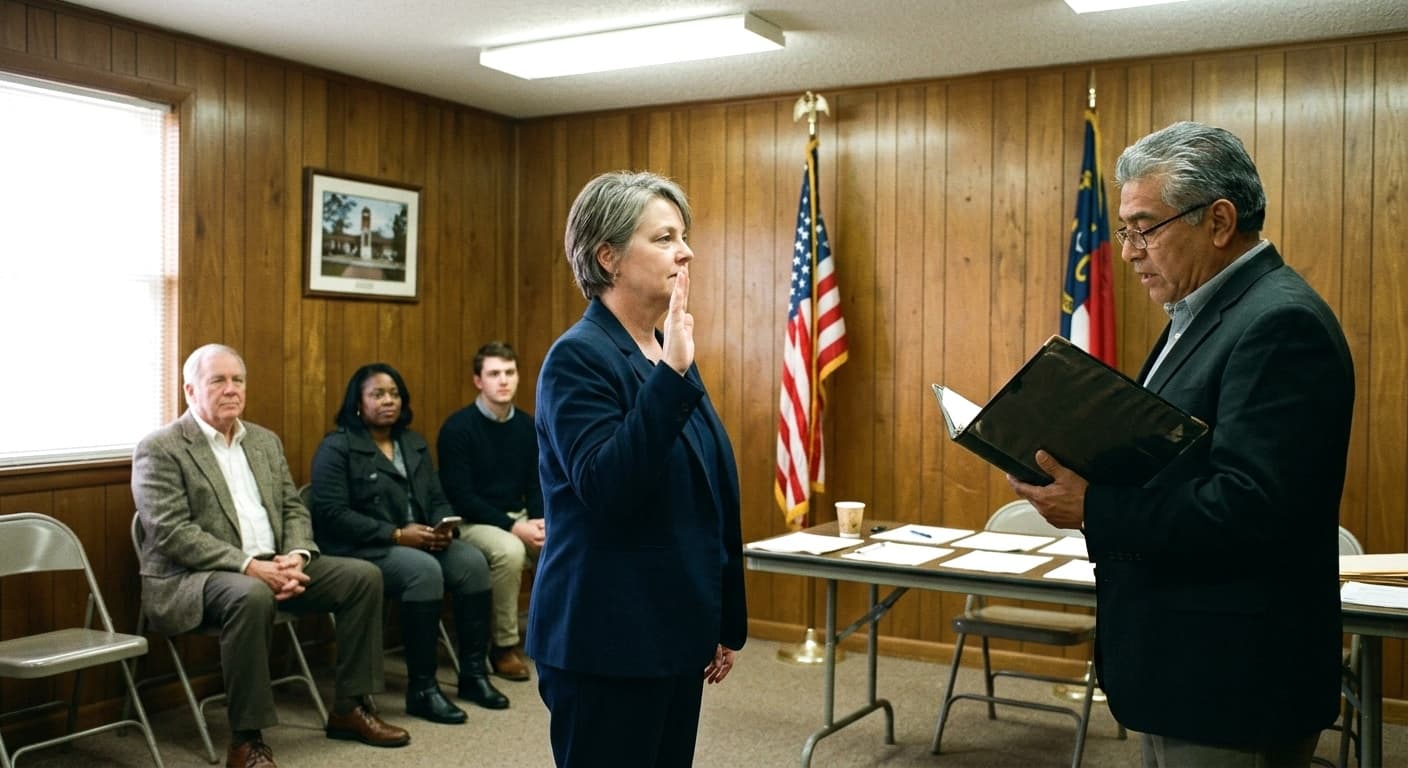
Weeks 7 and 8 (late December to early January): Oath day
If you did the first six weeks right, there is nothing left to do but show up. Keep a copy of the filed bond with your onboarding paperwork and put the renewal date on your calendar. Many public official bonds run for the length of the term, but some renew every year.
Two mistakes we see every cycle
The first is assuming your predecessor's bond carries over. An individual public official bond names a specific person, so when the person changes, the bond has to change too. The exception is a blanket bond the county or city carries for the position itself, which is why that Week 1 question matters.
The second is waiting for someone to tell you. Clerks are busy during the post-election rush, and the reminder letter, if there is one, may not arrive until mid December. By then you are working against holiday schedules and meeting calendars.
The short version
If you win on November 3, use that first week to find out whether you need a bond and how much it is. Apply by Thanksgiving. Have it filed by mid December. If you want every step laid out, including what to do when your state uses its own forms, our guide for newly elected officials has it.
And if you hit a snag, call us at +1-815-826-6324. We would rather help you sort it out in November than hear from you on January 2.